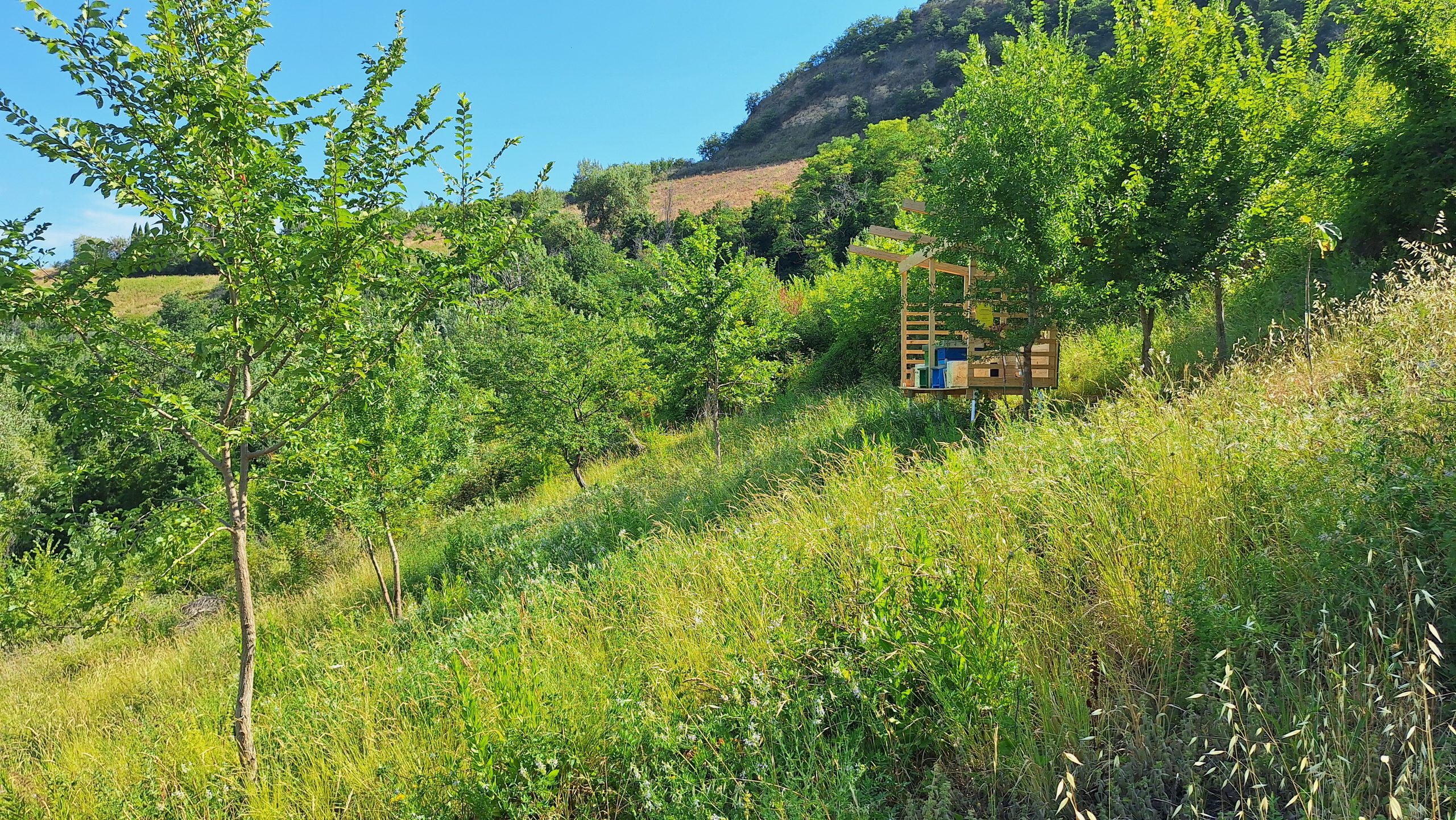
Beekeeping has been one of the most rewarding parts of setting up our farm, but it also delivered our most humbling failure yet.
As first-time beekeepers, dealing with varroa mites and other hive parasites meant stepping way outside our comfort zone. Yes, Gaby and Stefan are having the theoretical background from our beekeeping course at the Mandelbie, but we had no practical experience. Yet. In our course we were taught that an untreated colony is a doomed colony, so we were committed to doing it properly. Or so we thought. Equipped in a full beekeeping suit, thick leather gloves, and an industrial respirator mask, Stefan set out to perform our very first oxalic acid vaporisation.
Because it was a hot summer, we started early in the morning. The bees were already irritable that morning, buzzing with a sharp, high-pitched agitation.
First try. The bulky protective gear makes navigating the hives clunkier. Add to that the summer warmth and an industrial respirator mask. Stefan was only wearing his sneakers, and the bees found his ankles almost instantly. While taking sting after defensive sting, Stefan simply ran uphill through the bushes. Ouch!
Second try. This time with protective boots. In his nervousness and lack of hands-on experience, while hundreds of bees were buzzing around him, Stefan miscalculated the vapor exposure time and overadministered the dosage. The result was heartbreaking: instead of simply knocking down the mites, we overwhelmed the colony. Watching our bees drop and disorient themselves. Beekeeping demands calm, steady hands and exact scientific dosages; a fraction too much heat or vapor turns a medicine into a lethal fumigant.
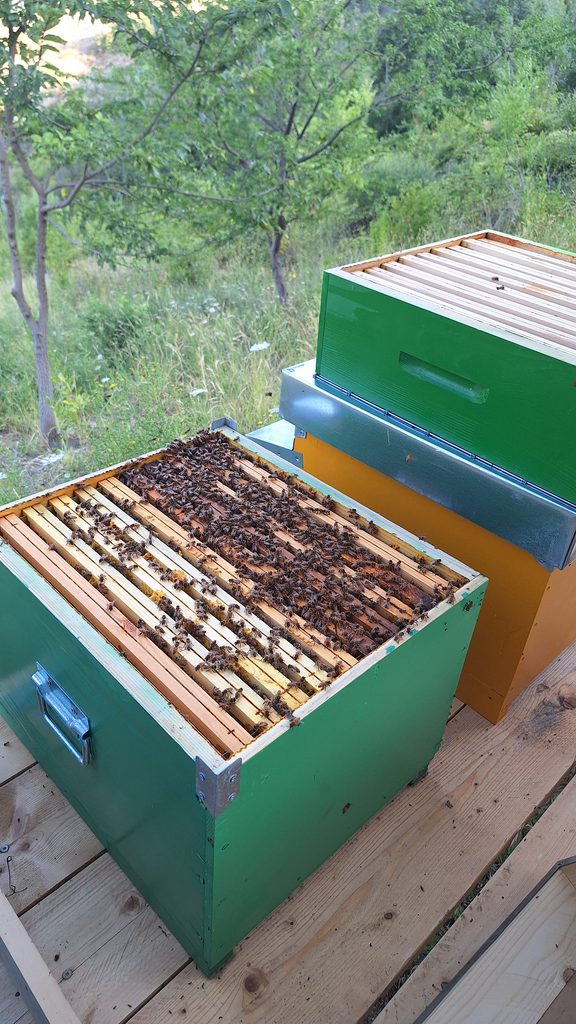
After a few days, Stefan had the courage to work on the second hive, with the lessons of hive #1 printed in his mind. Our second hive, treated with far greater restraint and luck, weathered the storm and emerged remarkably strong, vibrant, and bursting with life. But the overdosed hive was devastated. Its population plummeted, the brood pattern collapsed, and the colony lost the critical mass needed to guard its entrance.
That vulnerability quickly invited an even deadlier threat: the Asian hornet. (Vespa velutina.) These aggressive predators prey mercilessly on weak colonies. Within days of the hive losing its defensive numbers, we watched hornets hover right outside the flight board, hunting down the few remaining foragers in mid-air and raiding the comb. Our mistake with the acid had left the front door wide open for an invasion.
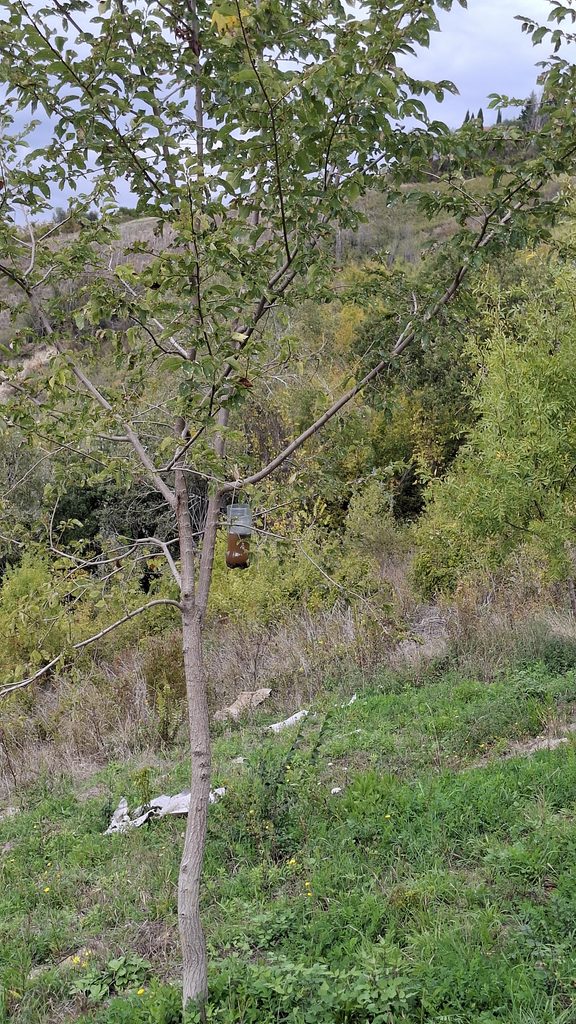
We couldn’t save that second hive, but we refused to let the predators turn their sights toward our surviving colony. Turning remorse into action, we immediately built and deployed selective bottle traps around the apiary perimeter, filled with a traditional attractant mix of beer, dark syrup, and white wine (which deters honeybees while luring hornets). Within forty-eight hours, the catchers were filled with dozens of hornets, halting their predatory raids and creating a safe corridor for our surviving hive.
Homesteading teaches you that nature is unforgiving of good intentions backed by poor technique. We lost a colony, but the lessons – measuring treatments gram by gram, respecting ambient temperatures, and proactively trapping predators before they establish territory – are etched into our farming journey forever.