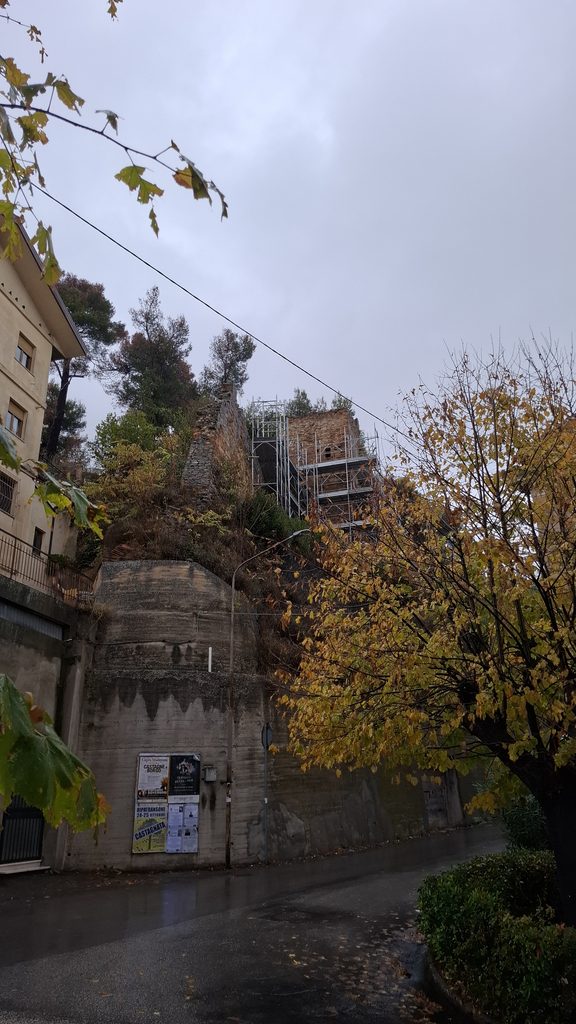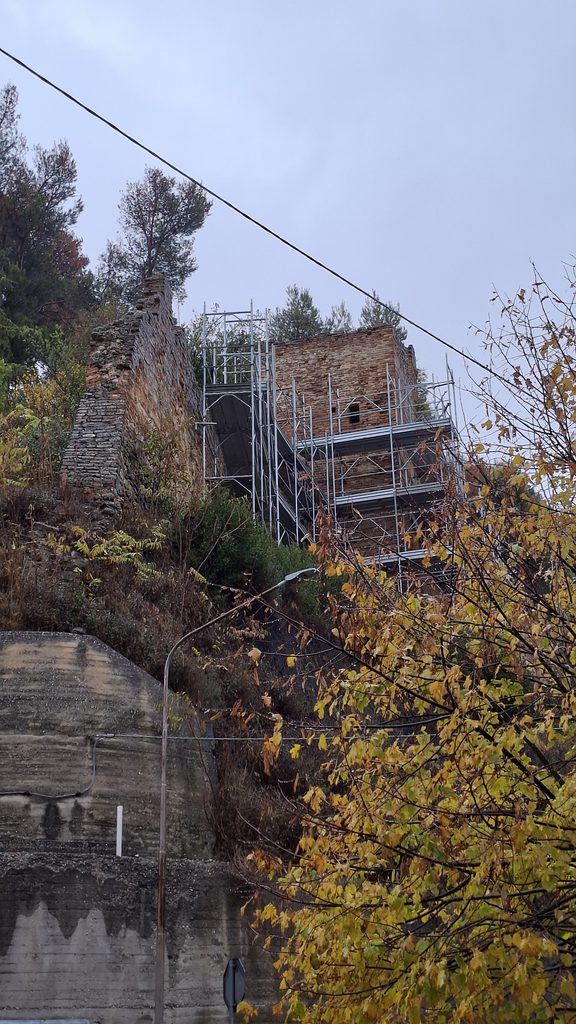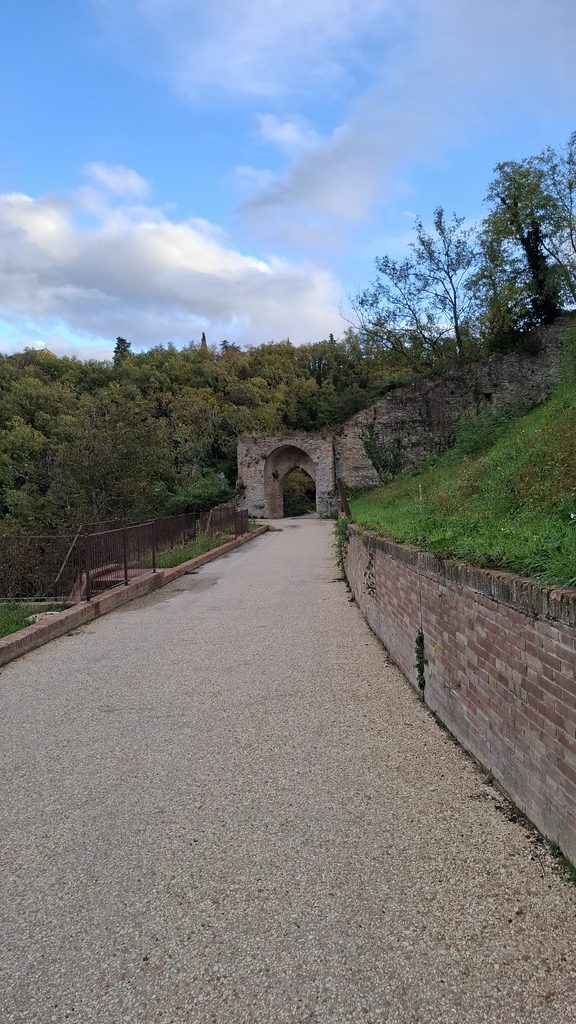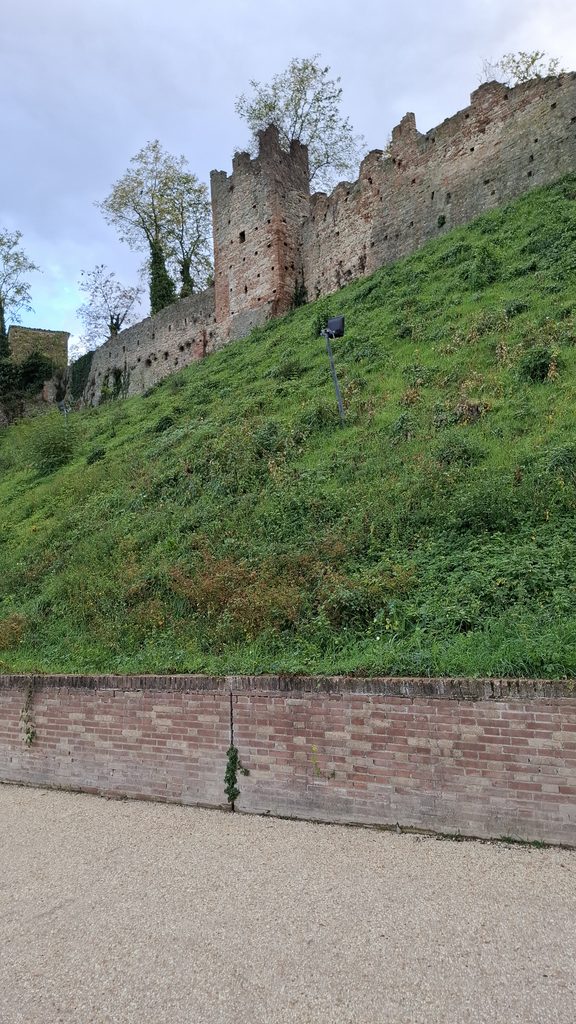
If you want to understand why Ripatransone feels so remarkably intact compared to many modernized Italian hill towns, start by looking at the massive brick curtain wrapping around its ridge. Perched at 494 meters above sea level, the historic center is encircled by 2,418 meters medieval and Renaissance fortifications, making it one of the longest and best-preserved ancient defensive wall in Le Marche.
Every time we drive up from our hill for a morning coffee in town, passing through those thick brick arches feels like crossing a threshold into another century.
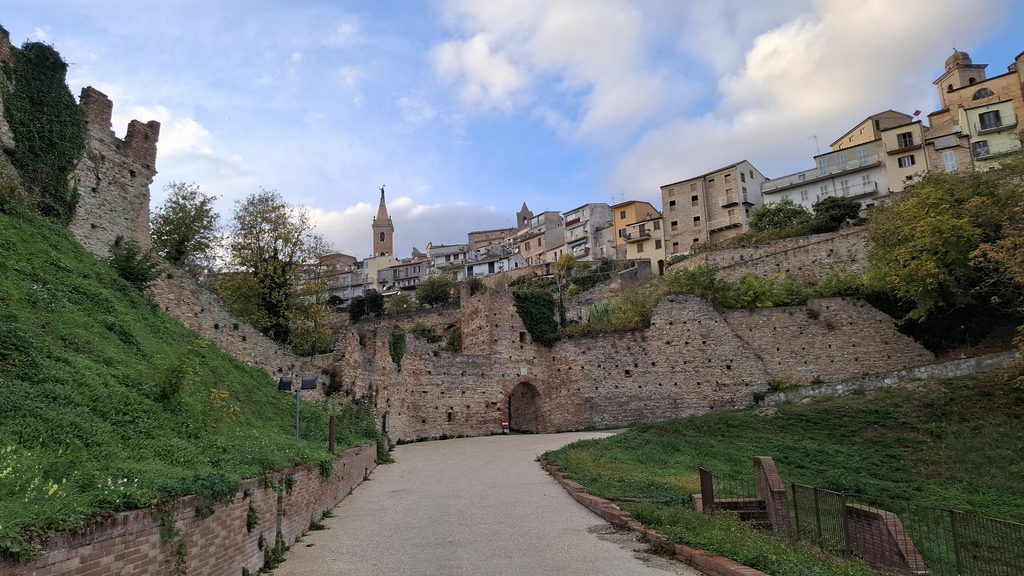
Why a small hilltop town needed a serious wall
To see why Ripatransone needed nearly two and a half kilometers of brick ramparts, you have to picture central Italy in 1205. Back then, Italy was not a unified country, but a volatile patchwork caught in a tug-of-war between the Holy Roman Empire and the Papal States.
After imperial troops destroyed Ripatransone in 1199, the locals rebuilt at breakneck speed and declared themselves an independent libero comune. A self-governing medieval city-state with its own laws and elected leaders. Sitting high between the Menocchia and Tesino valleys, Ripatransone became known as the Propugnaculum Piceni (“Bulwark of Piceno”). Wedged between two powerful regional rivals: Fermo to the north and Ascoli Piceno to the south.
With Fermo repeatedly trying to bring Ripatransone under its thumb (even besieging it in 1225), thick walls were not decoration. These walls were essential for survival.
Centuries later, in the late 1500s, Pope Sixtus V upgraded those medieval walls with sturdy round watchtowers and bastions.
Pope Sixtus V grew up just down the road in Grottammare and Montalto delle Marche, so tourists could easily assume he did it out of hometown affection, but instead his relationship with Ripatransone was actually quite bitter. Before becoming Pope, he had served as Bishop of Fermo (Ripatransone’s old rival) and once he took the papacy in 1585, he stripped Ripatransone of much of its church territory to create a brand-new diocese for his beloved childhood town of Montalto, demoting Ripatransone’s bishopric under Fermo.
Pope Sixtus V strengthened Ripa’s walls purely out of military pragmatism to crush banditry and defend the Adriatic coast, leaving the town with stronger defenses, even if its pride took a hit.
Decoding the gates: from Porta d’Agello to Our Parking Spot
As we explore the perimeter today, the surviving gates act like stone signposts to the town’s origins and our own weekly routine:
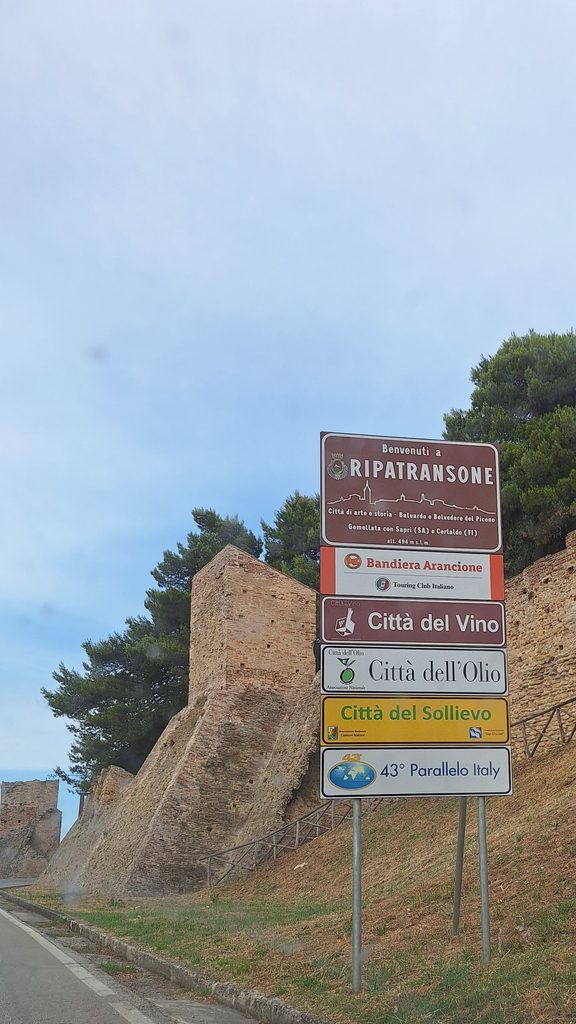
Porta d’Agello: Whenever we enter Ripatransone by car, this is the gateway that welcomes us into town. Guarding the northern end of the ridge, it takes its name from Agello, one of the four original hilltop castles that merged to form Ripatransone (and the one that kept its independent spirit the longest). Locals also call it Porta di Donna Bianca de’ Tharolis after a local heroine who, during a Spanish siege in 1521, rallied the women of the town, seized the enemy banner, and waved it from the gate’s watchtower to drive the invaders out.
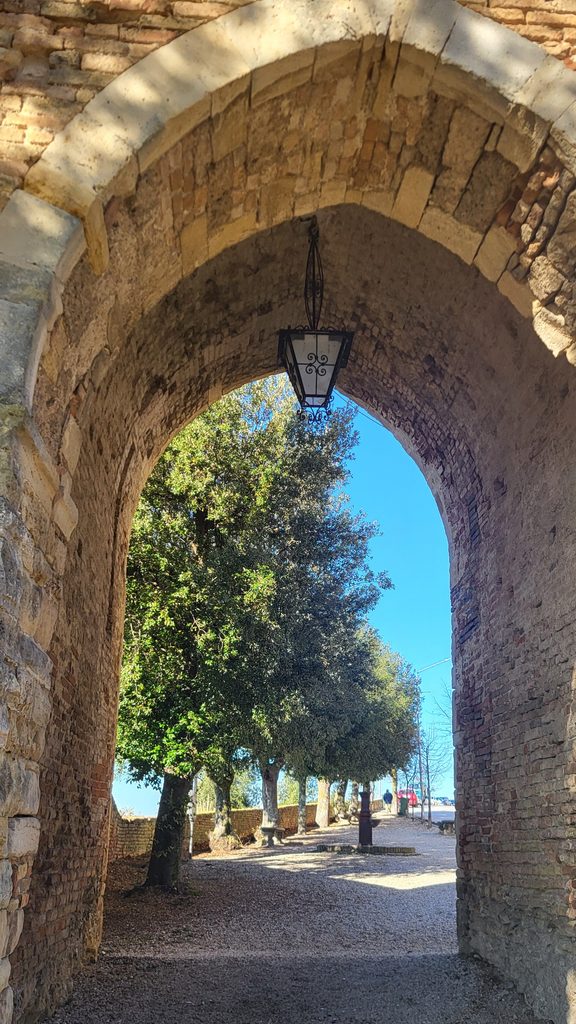
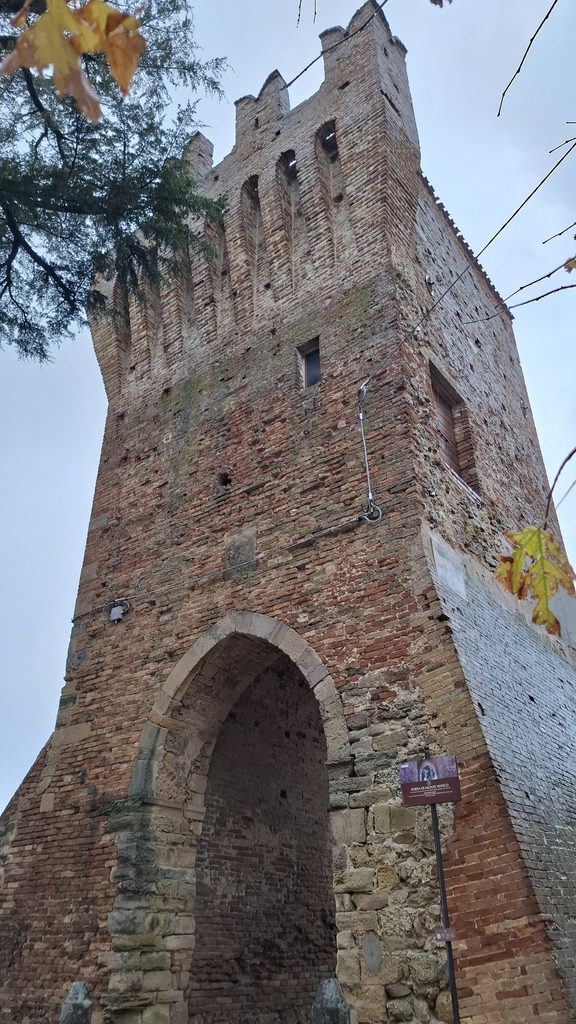
Porta Monte Antico: Standing at the highest point of town with its dramatic Ghibelline swallow-tail battlements, this gate is named after Monte Antico, another of the four founding hilltop castles. For us, it also marks the unofficial start of every town visit: right next to Porta Monte Antico is the ’roundabout’ where we often park our car, just steps away from our beloved Tiky Bar. The gate marks the start of the ancient road down to Cupra Marittima, now the Strada Provinciale Cuprense 23.
The earthquake and ongoing restorations
Walking along the exterior circonvallazione with the Adriatic Sea on one side and the Monti Sibillini on the other, is a magnificient experience, with the history above in your mind. Add to that that keeping a 2.4-kilometer monument standing takes constant care, especially after the 2016 Central Italy earthquakes. Through 2025 and 2026, Ripatransone has been carrying out a major multi-phase restoration backed by heritage and post-seismic reconstruction funds.
Looking at the old city gate while parking the car to catch a morning espresso, is a daily reminder that living here means sharing space with history. This is where you want to be.