
When tackling an abandoned, tangled hill in Le Marche, the first instinct could be to bring in heavy machinery and clear everything down to bare dirt. And honestly, this is the recommendation we got from many, and are ignoring consistently. However, what may look like a wall of weeds initially, is actually a thriving nursery of future food and shelter.
Instead of clearing en masse, we adopted a strict tree-by-tree clearing strategy. For every single sapling or bush we encounter, we pause and investigate how it might contribute to our future food forest.
Aligned walnut trees
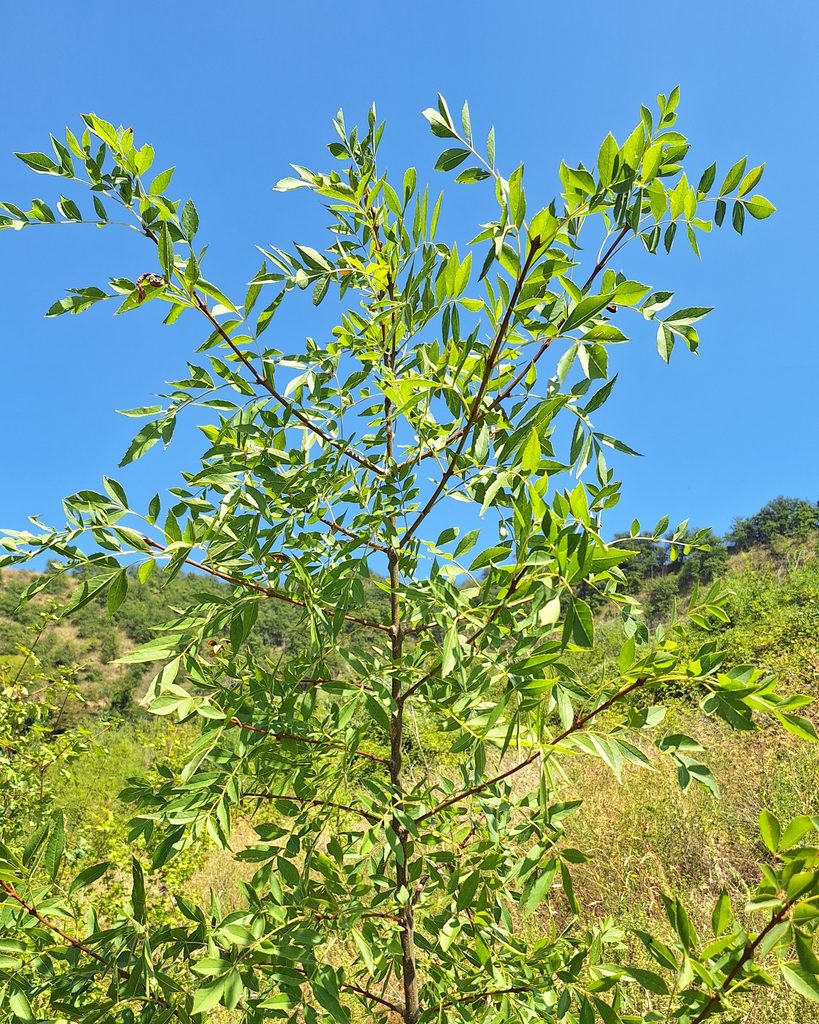
One of our most fascinating discoveries happened while cutting through dense brush along the slope: a neat line of young walnut trees, each around three years old, are growing almost perfectly downhill from one another.
Squirrels or birds likely buried the nuts along a natural contour, which means somewhere near the crest of our hill, a mature “mother” walnut tree must be hiding in the brush. We haven’t found her yet, but we are already designing around these saplings. Rather than relocating them, we plan to make these walnuts the anchor points for future plant guilds. In five to six years, they will repay our patience with something priceless under the intense Italian summer sun: deep, cool shade.
Wild cherry plums, strangled olives, and ancient figs
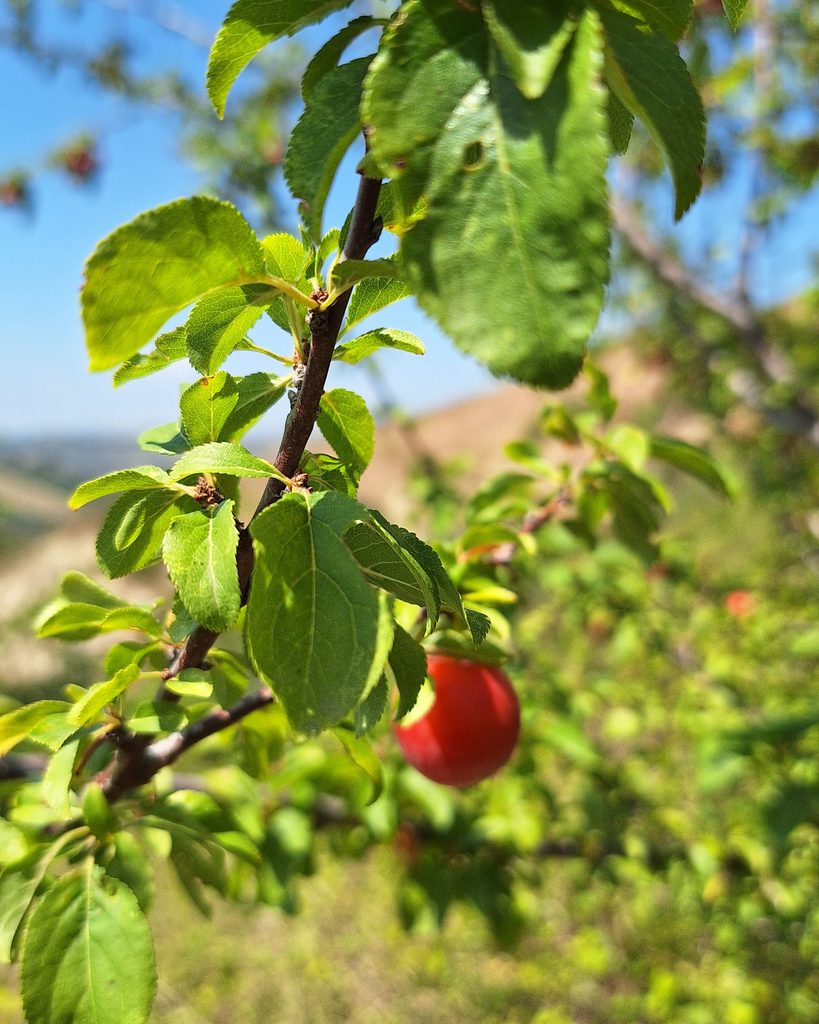
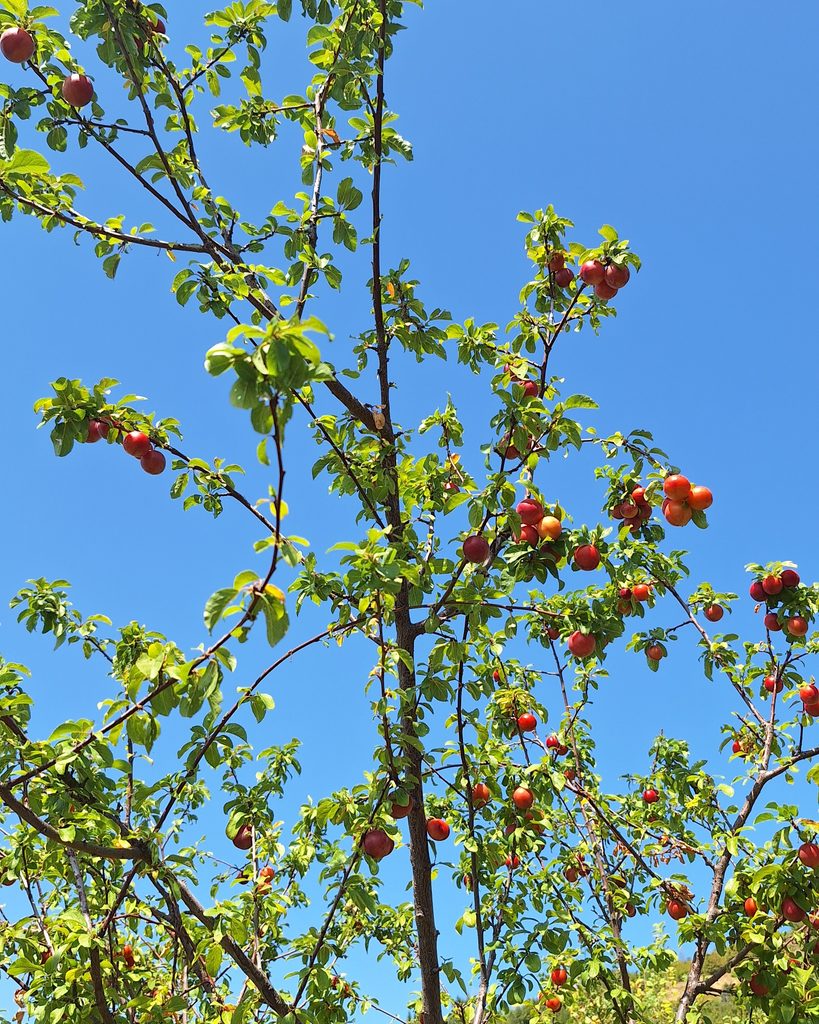
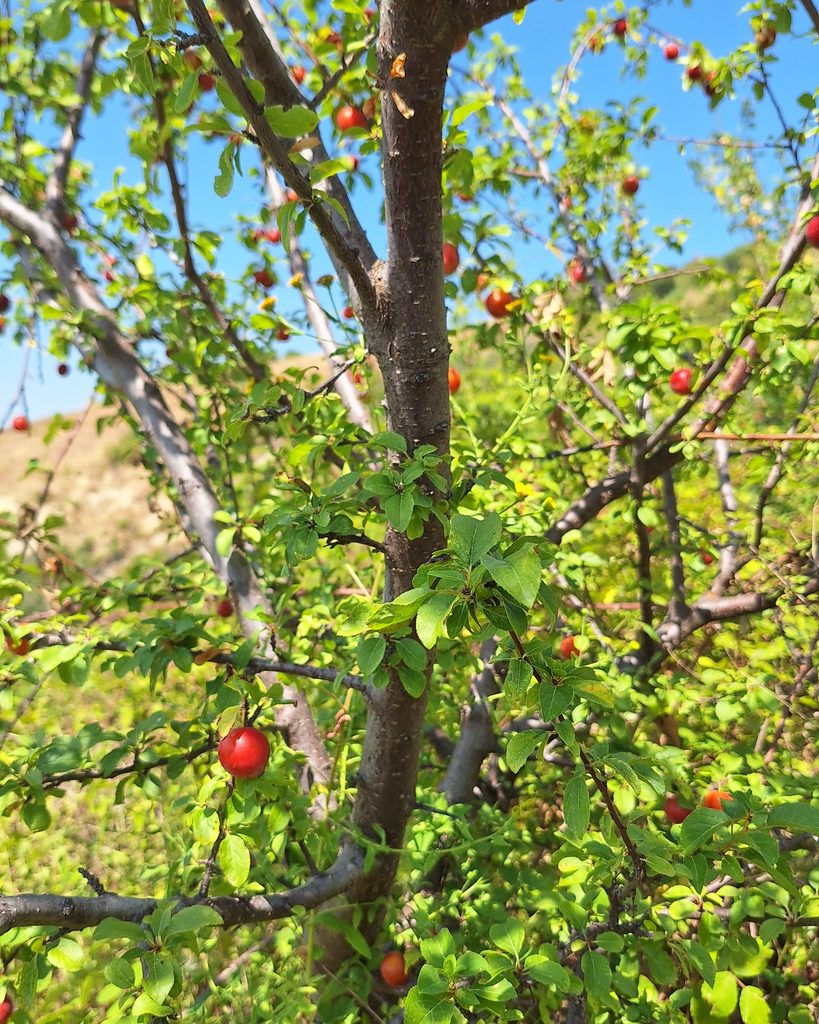
Deeper into the thickets, we uncovered several wild cherry plum trees. While some were young whips, a few were mature and heavily laden with ripe fruit. Sam and our friend Nancy spent a glorious afternoon filling buckets with sweet, tart plums.
Our homestead wouldn’t be an authentic Italian hillside without olives, so we also rescued a handful of forgotten olive trees suffocating under creeping vines. In the near future we hope to plant more olive trees by ourselves.
Our hill also hosts some authentic Italian fig trees, including one truly massive, gnarly specimen buried under decades of neglect. Clearing the strangling vegetation around this giant fig is one of our top preservation priorities.
Taming the wild blackberry bounty
Of course, not everything can stay. Our hill produces an endless sea of wild blackberries. We love snacking on them throughout the hot summer months, but left unchecked, they colonize everything in sight. Our rule of thumb: harvest the berries while they are ripe, then cut the brambles back aggressively.
Taking the time to clear by hand takes patience, but preserving established root systems saves years of planting effort and protects the natural balance of the hill.