
When we first landed at Ancona airport and completely fell in love with this region, we faced a rather immediate hurdle. We had spent months looking at over 100 properties on the other side of the Sibillini mountains, but suddenly we were in a place whose name we weren’t entirely sure how to say out loud to our new neighbors!
If you are planning a trip here, or if you’re just trying to tell your friends about the hidden gem of Italy you’ve discovered, you have likely run into the same Google query: How to pronounce Le Marche?
Let’s clear up the mystery once and for all, dive into why the name is actually a fascinating history lesson, and look at how to avoid a few hilarious translation traps.
The Correct Pronunciation (No, it’s not French!)
Because of how it is spelled, English speakers often default to a French-style pronunciation, saying something like “Le Marsh”.
In Italian, it is pronounced [leh ˌmarkeh].
- Le: Sounds like “lay” (but with a short, clipped ‘e’ sound).
- Marche: Sounds like “mar-kay”.
So, put it together: Lay Mar-kay.
Why is it plural?
You might notice that we always say Le Marche. In Italian grammar, le is the plural feminine article for “the”. This makes Le Marche the only region in Italy with a plural name!
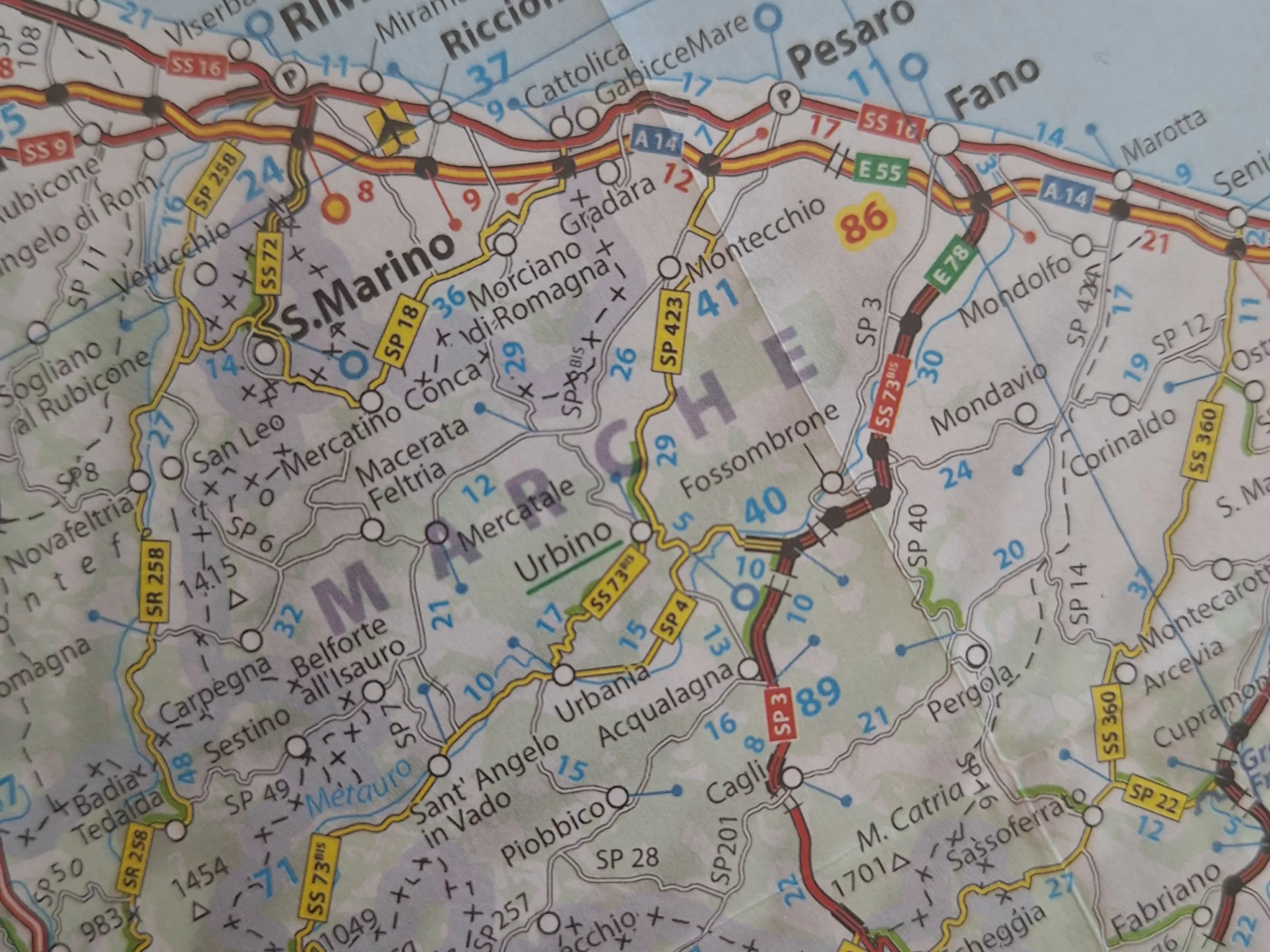
There is a beautiful historical reason for this. Long before Italy became a unified country in the 19th century, this land was divided into border regions of the Holy Roman and Papal States, known as marche (from the medieval English word “marches,” meaning borderlands). There was the March of Ancona, the March of Fermo, and the March of Camerino.
When the region unified, the plural stuck. And honestly, it fits perfectly. Le Marche is a region of plural personalities – one day we are working on our olive trees looking at snow-capped mountains, and fifteen minutes later we are staring at the Adriatic Sea. It truly is many worlds wrapped into one.
The English translation traps
When searching for travel tips online, you will see a lot of variation. Even major publications like The New York Times or The Guardian alternate between calling it “Le Marche”, “Marche”, or “The Marches”. According to the official regional tourism board, using Le Marche in English is perfectly accepted and preferred for uniformity. (And one day, we really will recheck our website to support this uniformity!)
However, whatever you do, beware of automatic digital translators! The word marche in modern Italian also translates to the noun “brands” (like clothing or commercial brands). Rest assured, we are farmers building a homestead, not running a corporate marketing firm!
A Little Golden Rule for Your Italian Journey
If you want to practice your Italian, try rolling the “r” in Marche just a tiny bit, and make sure to crisp up that final “kay” sound. The locals here in Ripatransone absolutely love it when you try, and a warmly pronounced “Buongiorno, siamo felici di essere qui nelle Marche” will open up doors (and bring out the local wine) faster than you can imagine.