When we first stood on our hill in Ripatransone, the land was a wall of brambles. (And it still is, most of it.) Although bees love brambles, this spring our goal was to transform a 100m2 area around our beehives into a more diverse pollinator paradise.
Instead of choosing for a wild mix of seeds, we assumed that our slope with intense sun and heavy clay needed a strategy to achieve this. Therefore we designed a Bee Island using a zoning and routing method. We wanted the plants to not compete for the little water available and, more importantly, to support (and not interfere) the daily work of our bees.
Our three-zone strategy
Working with a professional selection of plants suited for the Marche climate, we divided our meadow into three distinct zones:
- Zone 1: The Flight Path. Directly in front of our beehives, we need the ground to stay low. If you plant tall species here, the bees literally “crash” into them when returning home heavy with nectar. In this zone, we’ve sown Clover, Alfalfa, and Thyme. They create a green carpet that stays under the flight line and handles the heat beautifully.
- Zone 2: The Main Buffet. To the sides of the hives, we created larger islands of Honey Flowers and St. John’s Wort. These are the heavy lifters for nectar production. They thrive in dry clay and can be mown easily at a high setting once the blooming season ends.
- Zone 3: The Pharmacy. In the back corners, away from our walking paths, we planted Sage and Wild Fennel. These are incredible for bees but grow tall and woody. By keeping them in the “corners,” we ensure their tough stems don’t get in the way of our mower or our access to the hives.
Bees smell the electrical fields of blooms.
A well-designed meadow with concentrated islands of the same flower helps bees find their target much more efficiently.
Seeding on a hill
Planting on a slope comes with a specific challenge: if it rains (and it did, continuously, after we planted), our expensive seeds would have ended up at the bottom of the valley. We used a simple trick to prevent this. We mixed our seeds into a bucket of dry sand before scattering. This not only helped us in seeing exactly where we’ve already sown, but the weight of the sand helps the seeds settle into the crevices of the clay.
Seeds in loose clay risk to dry out and die before they can sprout. Once the seeds were down, we therefore spent an hour or two walking in the entire 100m2, using small steps to press the seed firmly into the earth. It’s the only way to ensure they stay in contact with the moist soil needed to start their journey.
Working with the Seasons
We’ve moved away from the idea of a perfectly manicured garden. A bee meadow on a hill in Le Marche is about balance. By choosing a “10/10 selection” of drought-resistant plants, we are creating an ecosystem that survives the intense summer while providing a steady supply of nectar.
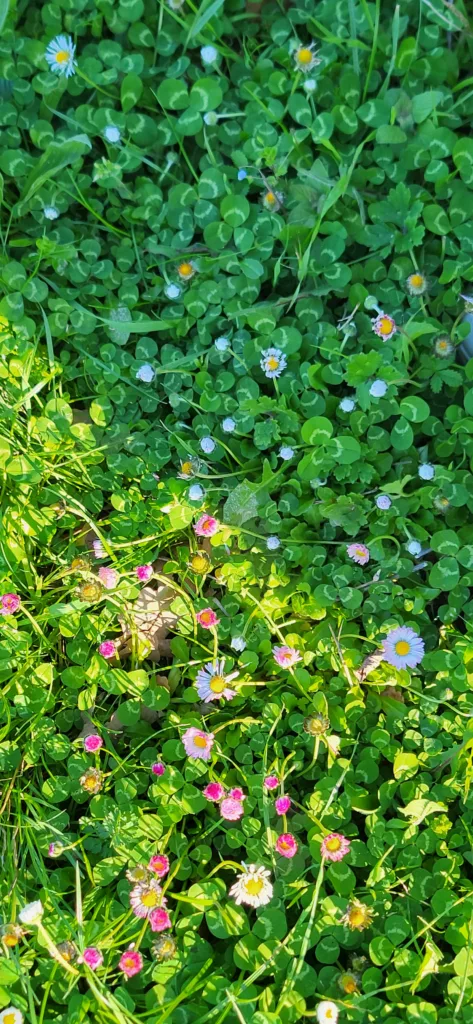
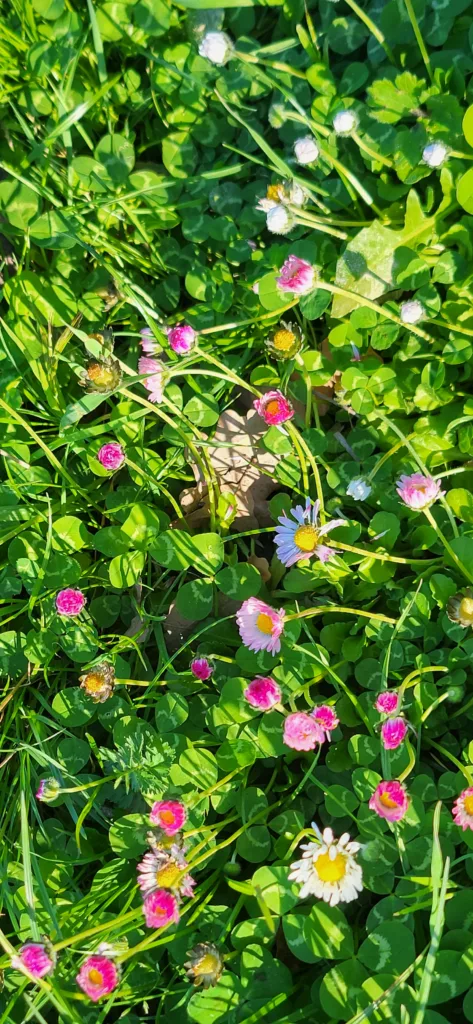
It’s a rewarding feeling to see the first green shoots appearing through the clay, knowing that soon, our hill will be a literal stop-and-shop for every pollinator in the valley.